Use cases · Food trucks & street food
Loyalty program ideas
for food trucks.
A food truck loyalty program has to fit in a serving window: one stamp card, ten stamps, a free plate at the end, and a QR sticker where the menu tape used to be. No terminal, no tablet stand, no paper cards dissolving in someone's pocket. The card lives in the customer's phone, so when the truck moves, the program is already there. The worked example is a one-truck taco kitchen.
Open the Ember Tacos demo
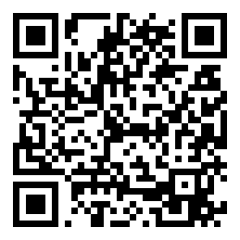
Point your phone camera here to try the live business page.
The truck in this playbook.
Ember Tacos is a fictional one-truck kitchen from our demo world: Rosa cooks, Nico takes the window, the menu fits a chalkboard. Nothing on this page is a customer story; the settings are the values we would enter on day one, and every screenshot comes from the live demo.
The problem: the truck's regulars are loyal to the truck, but the truck keeps moving. A paper punch card survives about two laundry cycles, and there is no counter to leave a tablet on. The goal: keep the regulars counting toward something, wherever the truck parks this week.
This is the smallest program in these playbooks on purpose. One card, one reward, one QR. Everything else on this site, points, tiers, prepaid passes, can wait until there is a second truck.
a taco plate
stamps to a free plate
cart pods a week
hardware to buy
The plan: one card, done right.
Trucks earn their loyalty in single transactions: same plate, same price, most days. That is stamp-card territory. Points would add a currency to explain through a window; a stamp is understood before the customer finishes scanning.
Day 1
Taco Ten
Ten stamps, one per visit, $8 minimum. The free plate at the end costs one plate for ten paid visits.
Day 1
The window QR
One sticker on the serving window enrolls the line. The QR studio prints it in the truck's red with the logo in the middle.
Week 2
The socials link-up
The business page carries Instagram and TikTok, where the week's locations get posted. The wallet card links back to the page.
The stamp card features page shows the tool itself; this page shows one truck running it.
Set it up: four steps.
1. Set up the business page
Business settings, Branding tab: name, tagline, the truck's red, the logo, and the socials where the locations get announced. Hours can say when the window opens; the pods say where. Docs: business settings
2. One staff account for the window
Whoever takes the window signs in on their own phone. A second account costs nothing when a cousin covers a festival weekend, and each stamp lands with a name in the ledger. Docs: staff accounts
3. Create the stamp card
"Taco Ten": the name is the pitch.
| Setting | Value | Why |
|---|---|---|
| Stamps required | 10 | Weekly regulars finish inside a season; the reward costs one plate in ten. |
| Minimum purchase | $8.00 | A plate qualifies, a soda does not. |
| Max stamps per day | 1 | One visit, one stamp, even if they come back for seconds. |
| Reward | Free taco plate | Physical claim on: the thing they already queue for. |
The taco emoji is the stamp icon; small things read from a queue. Docs: create a stamp card program
4. Print the window QR
QR studio, the business page code, brand red, logo center, downloaded as a file the print shop turns into window vinyl. One code covers joining, the card, and everything the truck adds later. Docs: brand your QR code
At the window.
- Order up: the customer shows their code while the plate is plated.
- Stamp: scan, type the order total ($8 minimum checks itself), Add stamp. The card in their hand updates before they leave the window.
- New face: point at the window sticker. Scan, email, done; their first stamp lands on today's plate.
- Ten of ten: the card flips to the reward. Scan the claim code, hand over the plate, the card starts again.
- Fix: a double-scan is your own undo in the card history; the daily cap catches most of them first.
One regular, worked forward.
Ava, the Tuesday lunch. Scans the window vinyl at the Belmont pod, joins in the queue, and her first plate is stamp one of ten. The card saves to her home screen next to the bank app.
Week six. The truck is across town at a brewery pop-up she found through the page's Instagram link. Same card, stamp six. Nothing to carry, nothing to forget; the truck moved and the program did not notice.
Week ten, the free plate. She brings a coworker to justify the trip; the coworker scans the same sticker while they wait. The reward cost one plate and recruited the next regular.
Meanwhile Rosa checks the dashboard on prep mornings: cards started, stamps this week, and how many cards sit one stamp from finishing. Those last ones are Friday's queue.
Read the numbers.
The stamp dashboard is one screen: members, stamps issued, cards completed, rewards claimed. For a truck, the week-over-week stamp count is the whole story; it says whether the new pod was worth the parking fee.
Completion is the health check. The docs put a good card between 40 and 60%: lower means ten stamps is too far for your route, higher means the reward is too cheap to matter.
Every stamp carries a name and a timestamp, so a festival weekend's numbers can be believed on Monday.
30, 60, 90.
Day 30
Count members against plates sold. Under one join in twenty plates means the sticker is invisible: move it to eye level by the order window and add one chalkboard line, "10th plate free, scan to start".
Day 60
Look at stamps per pod. If one location never stamps, its crowd is passing trade; save the loyalty pitch for the pods where faces repeat. The dashboard's week view makes the comparison.
Day 90
Completion under 40%? Ten is too far for your route; plan the next card at eight. A queue of finished cards instead? Raise the reward to a plate and a drink, and let the card keep its ten.
Questions
Before the vinyl goes on the window.
What is a good loyalty program for a food truck?
One stamp card: ten stamps, a free plate at the end, an $8 minimum so a soda does not earn one. That is the whole program. It runs from a QR sticker on the serving window and the phone already in the cook's pocket, which is exactly as much hardware as a truck has room for.
How do customers find the card when the truck moves?
The card is already in their phone, so it moves with them. The truck's public page carries the socials where the location gets announced, and the wallet keeps the card one tap away. The QR on the window enrolls whoever is standing in line, whichever pod the truck parked at.
Does a food truck loyalty card need an app?
No. The card lives in the phone's browser, saves to the home screen, and adds to Apple or Google Wallet. Customers scan the window QR once, join with an email, and show their code at the window from then on.
How does stamping work in a lunch rush?
The customer shows their code, whoever is on the window scans it, types the order total, and taps Add stamp. The minimum is enforced on the spot and the daily cap stops double stamps. It is one hand movement between taking the order and calling the next one.
Why ten stamps and not five?
Cadence. Truck regulars come about once a week, so ten stamps lands the free plate inside a season, close enough to finish and long enough that the reward costs the truck one plate for ten paid visits. The docs' completion band, 40 to 60% of started cards finishing, is the number to check at day 90.
What does it cost to run?
The software is one license at a one-time price, and the program itself costs one free plate per completed card. There is no per-customer fee, no monthly bill, and the QR sticker is the only thing to print.
The card that follows the truck.
One license, $349 once. The demo truck is parked and open, no signup needed.
Stamp cards · QR studio · Wallet passes · One install