Use cases · Bars & breweries
Loyalty program ideas for
bars and breweries.
A bar loyalty program runs on the tab: ten points per dollar when it closes, rewards that start at an appetizer and top out at a tasting for two, and a Mug Club tier the regulars earn by drinking here instead of anywhere else. Add a birthday pour that sends itself and a segment for the guests who fill the quiet nights, and the program works the room while the bartenders pour. The worked example is a sixteen-tap taproom.
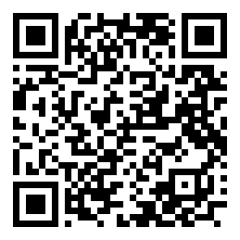
Open the Copperline Taproom demo
Point your phone camera here to try the live business page.
The taproom in this playbook.
Copperline Taproom is a fictional sixteen-tap bar from our demo world: rotating local drafts, a small kitchen, a shelf of named mugs. Owner Marta runs the floor, Cole works the bar. Nothing on this page is a customer story; the settings are the values we would enter on day one, and every screenshot comes from the live demo.
The problem: Friday takes care of itself, Tuesday does not, and the guests who come twice a week get the same treatment as the ones who wander in once. The goal: give the regulars a reason to keep the habit here, and a status worth crossing the street for.
Said plainly before the setup: a loyalty card does not create regulars. It recognizes the ones the beer already made, and it makes their next choice of bar a little less random.
a pint
an average tab
taps
to Mug Club
The plan: points on the tab, a tier for the regulars.
One card, one tier, one voucher that sends itself. Stamps stay out: tabs vary too much for a buy-ten deal, and a points balance keeps a $30 Tuesday and a $90 Friday both worth scanning. The tier is the piece a bar earns more from than any other business: regulars are the product.
Day 1
Taproom Points
Ten points per dollar on every closed tab. Rewards start at 600 points, a $60-spend appetizer, so the first prize is two visits away.
Day 1
The Mug Club
A membership tier at $250 spend: 1.25x points and a named mug on the shelf. Status the room can see.
Month 1
The birthday pour
A free-product voucher for one draft, sent on its own two weeks around each birthday. Nobody drinks alone on their birthday.
The loyalty card features page shows the tools themselves; this page shows one taproom running them.
Set it up: six steps.
1. Set up the business page
Business settings, Branding tab: name, tagline, brand color, logo, opening hours. This page is where the coaster QR lands. Docs: business settings
2. Give every bartender a staff account
Points land with the bartender's name in the ledger, and undo rights are per person. A shared login makes a busy Friday untraceable. Docs: staff accounts
3. Create the card
Loyalty cards → Create. "Taproom Points", brand copper, the tap wall as its photo:
| Setting | Value | Why |
|---|---|---|
| Points per $1 | 10 | A $45 tab reads as 450 points, not 4.5. Big numbers feel earned. |
| Welcome bonus | 100 points | A sixth of the first reward on day one; enough to make the card worth keeping. |
| Points expire | 12 months | A year of quiet forfeits the balance, and the ledger says why. |
| Max points per purchase | 1,500 | A $150 tab earns in full; a mistyped one does not. |
4. Price the rewards in pours, not percentages
Three rewards, each something the kitchen or the bar already makes:
| Reward | Points | Costs the guest |
|---|---|---|
| Complimentary appetizer | 600 | About $60 of tabs, a second visit. |
| Complimentary craft cocktail | 900 | About $90, a good month. |
| Beer tasting for two | 2,000 | The date-night prize: $200 of tabs, and they bring someone. |
The ladder matters more than the prices: a close first rung, a middle worth saving for, a top that turns one guest into two. Docs: manage rewards
5. Add the Mug Club tier
Two levels: Regular (everyone) and Mug Club at $250 spend with a 1.25x multiplier. Members qualify on their own when the tab history crosses the line; the card in their wallet shows the badge the same night. The physical mug on the shelf is your side of the deal. Docs: membership tiers
6. Arm the birthday pour and save two segments
Create "Birthday Pint" as a free-product voucher for one draft pour, pick it on the club form with 14 days of validity, and the nightly sweep does the rest. Then save "Weeknight regulars" (3+ visits in 90 days) and "Gone quiet" (no visit in 30 days); both come back on this page under launch and measure. Docs: birthday rewards · member segments
Launch: a coaster, not a speech.
The QR goes where the waiting happens: on the coaster, on the tap list, by the card reader. The pitch is one line at close, when the tab total makes the points concrete.
The coaster
This round counts.
Ten points a dollar, a free appetizer at 600. Scan, join, done before the head settles.
The close-out line
"That's a $52 tab, which is 520 points if you're on the card. The QR's on your coaster; I can scan you before you go."
The happy-hour lever: a 20% voucher, capped at $15, that the "Weeknight regulars" segment gets by email. It is worth the most on a quiet night, which is the point.
Mistakes to avoid: putting the first reward at 2,000 points (the first rung must be visible from the second visit); pitching the card mid-rush instead of at close; announcing the Mug Club before ten members carry the badge. Status needs witnesses first.
At the bar.
- Close the tab as usual; the program never touches the till.
- Scan: the guest shows their code, the bartender enters the tab total, Add points. Mug Club members earn at 1.25x on their own.
- Split bills: each guest shows their own code for their share. Two scans, two balances.
- Claim: at 600 points the appetizer shows in the guest's wallet; they tap Claim, the bartender scans the reward code, the kitchen fires it.
- Fix: a mistyped tab is the bartender's own undo from the card history. Anything older is Marta's delete, with the ledger keeping both entries.
One regular, worked forward.
Ava, Tuesday regular. Scans the coaster on a slow night, joins with an email, and her $62 tab lands 620 points plus the welcome bonus. Points where a receipt would be.
Six tabs in, her spend crosses $250 and the card flips to Mug Club on its own: 1.25x from here, her mug joins the shelf, and the badge sits on the card she shows at close. Nobody at the bar had to remember anything.
The claim night: at 600 points she trades for the appetizer and brings a friend to help eat it. The friend scans the same coaster; that is the program acquiring its next member at zero cost.
Meanwhile Marta checks two numbers monthly: how many guests carry the Mug Club badge, and how many sit in "Gone quiet". The first is the moat; the second is next month's guest list.
Read the numbers.
The card's analytics page tracks points issued against points redeemed, month over month. Issued climbing while redeemed sits at zero means the first rung is too far; guests who never claim stop scanning.
The segment counts are the bar's early warnings: "Weeknight regulars" growing is the happy-hour voucher working, "Gone quiet" growing is the neighborhood forgetting you exist.
Every point in or out sits in a ledger with a bartender's name on it, which is what makes the undo button honest.
30, 60, 90.
Day 30
Scans per shift under ten? The coaster is not doing its job; move the QR to the tap list and add the close-out line to the shift notes. Sign-ups are a bartender habit before they are a guest habit.
Day 60
First appetizers claimed. If redemptions sit at zero, drop the first rung to 500 points; edits apply from today and the ledger keeps the history. Email "Weeknight regulars" the happy-hour voucher and watch Tuesday.
Day 90
Count the Mug Club. Ten badges is a wall of named mugs and a queue to join it; two means the threshold is too high for your tab sizes, so consider $200. Then email "Gone quiet" before the quarter ends.
Questions
Before the coasters go out.
What is a good loyalty program for a bar?
Points on the tab, plus a named tier for the regulars. Ten points per dollar keeps the math invisible at the bar, rewards start at a $60-spend appetizer, and a Mug Club tier at $250 lifetime spend gives the best seats an earned status. One scan at close runs all of it.
How does a digital mug club work?
As a membership tier on the loyalty card. Set a spend threshold, $250 in this playbook, and everyone who crosses it moves up on their own: a higher points multiplier, a name on the mug shelf, and a badge on the card in their wallet. No spreadsheet, no annual fee to administer.
Do bar guests need to download an app?
No. The card lives in the phone's browser and saves to the home screen or to Apple and Google Wallet. Guests scan a QR on the coaster, join with an email, and show their code when they close the tab.
How do points work on a bar tab?
The bartender scans the guest's code and enters the tab total when it closes; points are calculated from the amount. One tab, one scan. Splitting the bill works too: each guest shows their own code for their share.
What fills a quiet Tuesday night?
A segment plus a voucher. Save "Weeknight regulars" (three or more visits in ninety days), then email it a happy-hour voucher that is only worth using early in the week. The guests who already come on Tuesdays recruit the ones who almost do.
Can the program handle a birthday drink?
On its own, yes. Create a free-product voucher for one draft pour, pick it on the club form, and a nightly sweep sends it two weeks around each member's birthday, at most once per year. The redeemed pour shows up in the ledger like any other claim.
Make Tuesday somebody's habit.
One license, $349 once. The demo taproom is open, no signup needed.
Points · Membership tiers · Vouchers · One install